Skills
Building data-driven applications and intelligent systems with SQL, Python, Machine Learning, and Artificial Intelligence.
About Me
Hey, I'm Vivek. I'm doing a Master's in Computational Data Science at Temple University, and most of my work now sits in one place: AI systems you can actually trust to tell you when they don't know.
That sounds abstract, so here is what it looks like. On HOOT, a RAG assistant for Temple faculty policy questions, I spent most of my time on the guard that keeps it quiet when retrieval comes up empty. A confident wrong answer about someone's benefits is worse than no answer. On a hallucination-detection study across 10,000 HaluEval examples, the fine-tuned model sat at exactly chance for a while. Chasing down why taught me more than the result did. It turned out to be a loss-weighting scheme quietly sabotaging an already-balanced dataset.
I like problems where the honest answer is a number. Can a frozen medical encoder with nothing but a linear probe on top classify chest X-rays well enough to be a tool inside an agentic system? It turned out yes, 95.6% across four classes. Can a model predict who in an office clicks a phishing email purely by counting what it observes, with no access to their reasoning? That one I'm still finding out.
Before the Master's I was building rather than researching. I worked as a Frontend Developer Intern, writing Angular for a diamond-industry client. Then as a Python Data Analyst Intern, cleaning 45,000+ records into something a model could use. I currently support classroom technology at Temple. I've also built things for their own sake: Voise.ai and Lyra AI for text-to-speech, a cloud image-processing app on Django with EC2 and S3, a financial-transaction NER system in spaCy, and a Neo4j knowledge graph of college baseball rosters.
I'm looking for AI and ML engineering work where the evaluation matters as much as the model. If you have something in that direction, my inbox is open.
Skills
Research
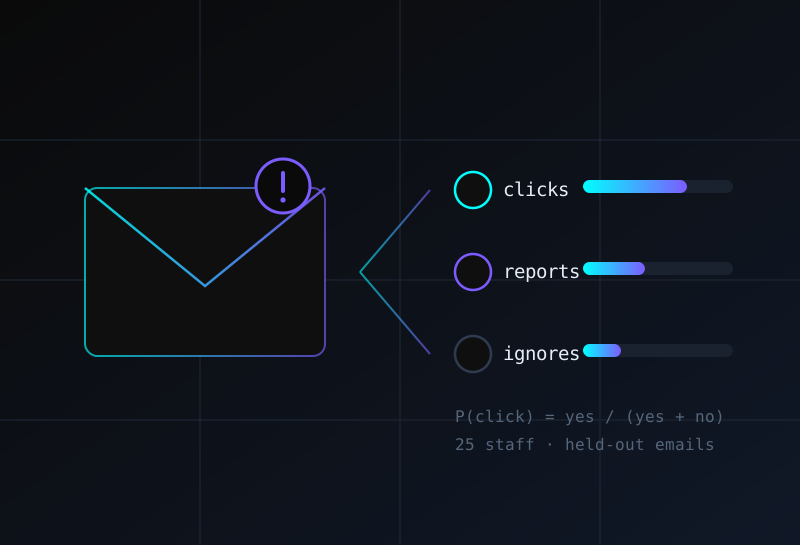
Staff at a fictional hospital get simulated phishing and real email. ALERT predicts whether each person will click, report, or ignore a message. It never sees why they act. It only counts what it observes, as P(click) = yes / (yes + no). I wanted to know how far counting alone gets you. So I benchmarked the counting twin against a scikit-learn pipeline on the same data, and graded both on emails neither had seen. An email generator builds new phishing out of real messages. It swaps the details, like reference numbers, wards, days and times, then adds the things that make a message look fake. A SQLite schema seeds the personas. A Streamlit app runs the training and an instructor workspace. Backend and frontend stay split: if a module draws, it is frontend; if it decides, it is backend. Nothing in the backend imports Streamlit. Every name, domain and record is made up.
My Master's capstone, advised by Prof. Xinghua Mindy Shi: an agentic AI system for Alzheimer's, built so that every diagnostic tool it calls can be tested on its own. The imaging tool is the part that exists today, and I built and measured it on chest X-rays first, across four classes: Covid-19, Normal, Pneumonia and Tuberculosis. Nothing in it is fine-tuned. I froze Google's MedSigLIP encoder and trained only a linear probe on its embeddings. That reached 95.6% on a 2,791-image test set. Frozen DINOv2 scored 88.8% and RAD-DINO 87.9% under the same protocol. The same encoder used zero-shot scores 48.6%, so nearly all of the accuracy comes from the probe. I also ran a prompt-engineering study on MedGemma, with a strict 10/20/70 try-validate-test photo split. Adding one solved example per class took Normal vs Pneumonia to 90.71% on a 140-image held-out test (macro F1 0.9071, MCC 0.8144). Two lessons stuck. Short prompts beat elaborate ones on a small model. And naming a sign like “hazy” in the prompt makes the model see it in healthy lungs. The agent layer and the Alzheimer's-specific work are in progress, and I'll write them up as they take shape.
A RAG assistant that answers Temple faculty questions about HR, benefits and policy. It uses only Temple's own published documents, and every answer links back to its source. Retrieval is hybrid: dense vectors from ChromaDB plus BM25 sparse search, combined through LangChain's EnsembleRetriever and re-ranked with FlashRank. The part I care about most is the deferral guard. When nothing retrieved matches the question, the system says so instead of guessing. I also wrote HOOT's architecture, LLM-integration and deployment specs for the AI/ML engineer and DevOps engineer roles.

Comparing ways to catch a RAG system answering with something its source documents never said, measured across 10,000 HaluEval examples. Zero-shot NLI with BART-MNLI and DeBERTa-v3-Large reached 68.8% accuracy (F1 0.657) with no training at all, ahead of SummaC-Zero at 67.2%. The fine-tuned DeBERTa-v3-small looked like a dead end at first. Loss sat at 0.693, which is exactly ln 2, and it predicted one class for every example. I ruled out the obvious suspects by testing them: a raw PyTorch loop with the same learning rate and the same data converged inside one epoch. The real cause was a custom WeightedTrainer. It applied inverse-class-frequency loss weighting to a dataset that was already balanced 5,010 to 4,990, on top of label smoothing and a cosine schedule. Swapping it for plain cross-entropy gave 97.1% accuracy and F1 0.971 on a 3,000-example validation split. I also found the write-up had HaluEval's hallucination label documented backwards. The code was right; the prose was not.
Projects

A full-stack text-to-speech and speech-to-speech web app covering the pipeline behind tools like ElevenLabs: typed text becomes natural speech in a chosen voice and language, and spoken recordings can be transcribed, translated, and re-spoken in another language. Includes accounts with JWT, Google and OTP sign-in, per-user credit tracking, and project-based history, built entirely on free-tier services.
Segmentation of 973 retail customers across 38 countries, built in Python with pandas, NumPy, scikit-learn and SciPy. I engineered 10 behavioral features from 50,000+ transactions, including RFM analysis, purchase patterns and engagement metrics, then used K-Means at k=3 to pull out three segments worth marketing to differently: High-Value Loyal (110 customers, $1,450 average spend), Mid-Value Regular (176 customers, $629), and Low-Value Infrequent (606 customers, $331). Hierarchical clustering produced the same three-group structure, and trimming outliers at the 99th percentile narrowed the set from 973 to 892 and made the segments cleaner to read.
A knowledge graph in Neo4j AuraDB modeling 20+ college baseball programs, ingesting 800+ players, 40 coaches and the conference hierarchies above them into 589 nodes and 575 relationships. Roster data comes from a custom Python, Selenium and BeautifulSoup scraping pipeline. On top of it sit transfer detection, semantic player queries and graph visualization, all driven through Cypher.
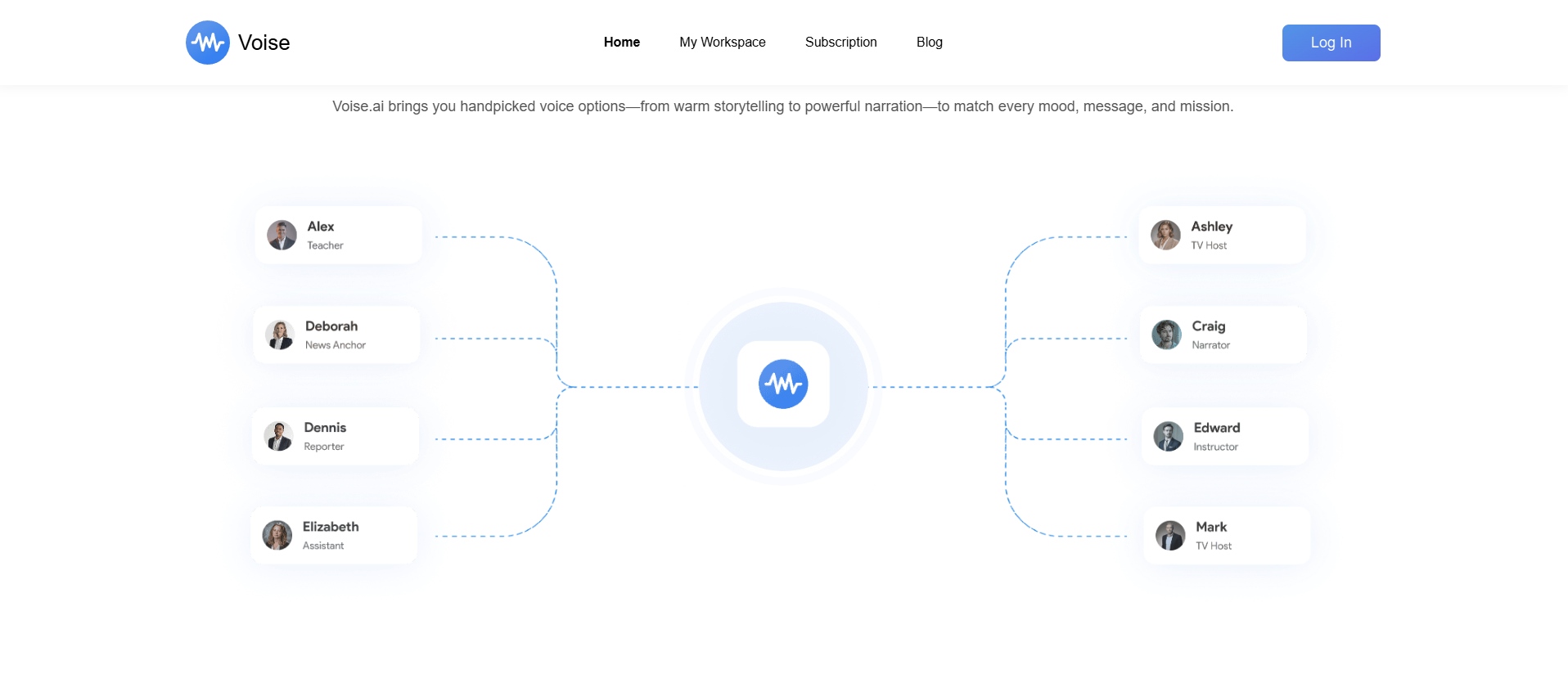
Voise.ai is an AI text-to-speech platform that generates human-like voiceovers in multiple languages and accents. It is aimed at content creators, educators and businesses who need audio for videos, podcasts and presentations without a recording setup.
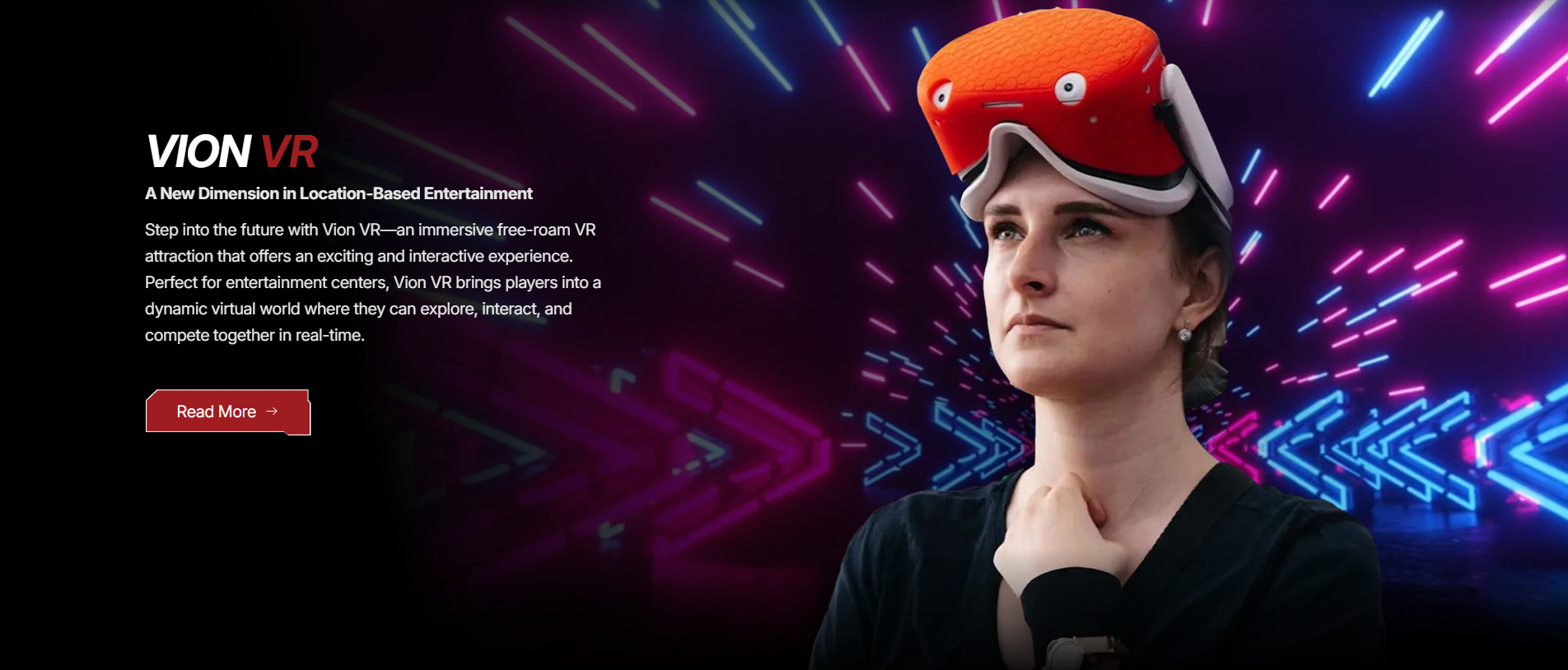
A platform for a laser-tag equipment and arena-design business operating across the UAE and KSA, covering clients from equipment selection through venue launch and ongoing operation.
Experience
I keep Temple's teaching spaces running, handling 20+ support requests a week across hardware, software, network and AV, and resolving 95%+ of them on time. Most of it is diagnosing a problem fast while a class waits, which has made me a good deal quicker at narrowing down where a fault actually is.
I worked on large, messy datasets in Python with Pandas and NumPy, processing 45,000+ bug reports and help-desk tickets. Automating the cleaning and validation steps lifted data completeness by 40% for downstream ML inputs, and debugging the pipelines brought recurring errors down from 20 a week to 5, saving the team 8+ engineering hours every week.
Built responsive Angular applications for a diamond-industry client, turning wireframes into cross-browser UI components alongside senior developers. For my undergraduate final project I designed and built a frontend website on my own, applying what I had picked up about modern web development and UI/UX.
Let's Connect